

Mini-Splits Installed Right in Tampa Bay
Mini-Split Systems Solve the Toughest Cooling Challenges
If your house has a room your central AC can never quite reach, you already know the problem. A mini-split, also called a ductless AC system, delivers heating and cooling directly to a specific room or zone, with no ductwork required. You need one when: a new room addition or converted garage sits outside your central system's reach; a Florida room or sunroom heats up faster than the main AC can handle; a home office or workshop needs its own temperature control; your older home has no existing ductwork; or one room always runs too hot or too cold no matter how long the central system runs. Mini-splits solve all five of those situations cleanly.
Heat and humidity mean your AC system runs nearly every month of the year. A single central thermostat can't satisfy every room equally. West-facing rooms bake in the afternoon sun. Sunrooms trap radiant heat. Garages turned into gyms or workshops generate their own heat load on top of the climate. A mini-split lets you set the right temperature for the right room without overcooling the rest of the house, cutting energy use and reducing wear on the central system at the same time. That matters here more than it does anywhere else in the country.
The Right Choice for Zoned Comfort
A mini-split system is a ductless heating and cooling unit that delivers conditioned air directly to one room or zone. You need one when your central AC can't reach a space, or when a specific room needs independent temperature control. Mini-splits are the most efficient solution for room additions, sunrooms, converted garages, older homes without ductwork, and any room that consistently runs too hot or cold.
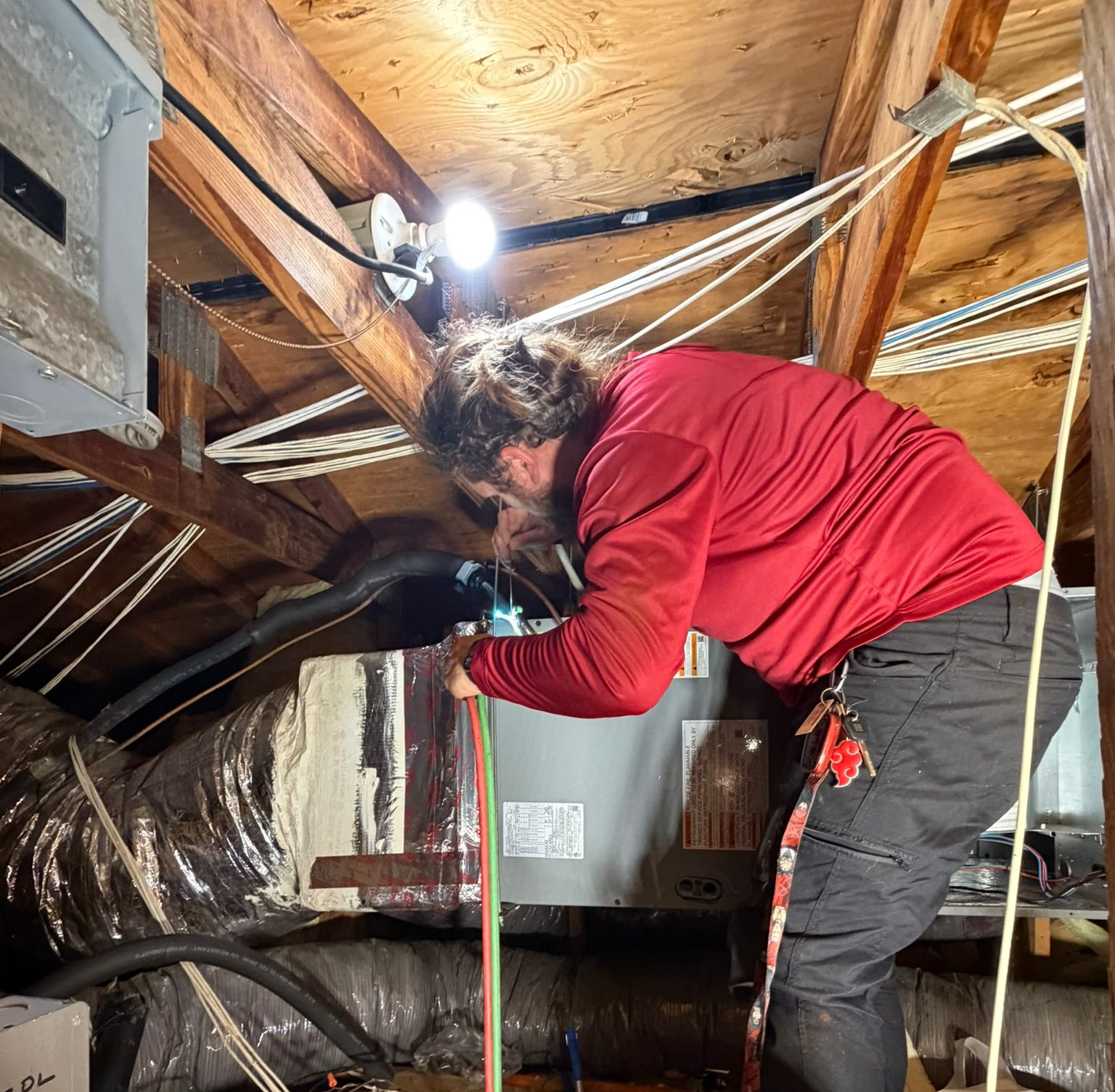
What Mini-Split Installation Looks Like, Start to Finish
Installing a mini-split correctly means more than mounting a wall unit. Every step from sizing the system to sealing the line set penetration affects how well the system performs for the next 15 years. This is what we do on every install.
Room Assessment
We measure the space and note insulation quality, window orientation, and sun exposure. Florida's afternoon sun on a west-facing wall changes the BTU requirement significantly; we account for it.
BTU Sizing
We calculate the exact cooling and heating load for the room using Manual J principles. An oversized unit short-cycles and leaves the room humid. An undersized unit runs all day and still can't keep up. Correct sizing is non-negotiable.
Wall Unit Placement
The indoor air handler goes where it can circulate air evenly across the room without blowing directly on seating or sleeping areas. Height, wall structure, and proximity to the outdoor unit all factor into placement.
Refrigerant Line Routing
We run the refrigerant lines, power cable, and condensate drain through a small penetration in the wall, typically 3 inches, and seal it against humidity and insects. The line set is protected with a weatherproof chase on the exterior.
Outdoor Unit Mounting
The condenser unit mounts on a concrete pad or wall bracket with proper clearance for airflow and service access. Placement matters; restricted airflow reduces efficiency and shortens the compressor's life.
System Commissioning
We charge the system, test every operating mode, verify refrigerant pressure, confirm the condensate drain flows correctly, and walk you through the remote or app controls before we leave. No shortcuts on the final check.
Mini-Split Questions Homeowners Ask Most
Here are the questions we hear most often before a mini-split install answered directly.
What Is the Difference Between a Single-Zone and a Multi-zone Mini-Split System?
A single-zone system has one outdoor condenser connected to one indoor air handler; it conditions one room. A multi-zone system connects one outdoor unit to two, three, or four indoor units in separate rooms, each with its own thermostat. Multi-zone costs more upfront but is far more efficient than installing multiple separate systems.
How Much Maintenance Does a Mini-Split System Need?
Mini-splits need less maintenance than ducted systems because there are no ducts to leak or accumulate debris. The indoor filter should be cleaned every 4-6 weeks in a dusty, humid climate. A professional tune-up once a year covers refrigerant levels, coil cleaning, and electrical connections, keeping the system running at rated efficiency.
Do Mini-Splits Qualify for Energy Efficiency Rebates?
Yes. High-efficiency mini-splits with a SEER2 rating of 15.2 or above may qualify for federal tax credits under the Inflation Reduction Act up to 30% of the installed cost, capped at $600. Duke Energy and TECO also offer periodic rebates for qualifying systems. We can confirm current rebate availability when you call for an estimate.
How Long Does It Take to Install a Mini-Split System?
A single-zone mini-split installation typically takes 4-6 hours for an experienced crew. Multi-zone systems with three or four indoor units may take a full day. Most homeowners can have a new system running the same day we come out, depending on the scope and any electrical work required.
Can a Mini-Split Heat in Winter As Well as Cool in Summer?
Yes. All Daikin mini-split systems we install are heat pumps; they both cool in summer and heat in winter using the same refrigerant cycle, just reversed. Mild winters fall well within the operating range where a mini-split is highly efficient for heating. Most homeowners find one system handles both seasons comfortably without a separate heating unit.





