

Heat Pumps Built for Florida
A Heat Pump Handles Heating and Cooling in One System
A heat pump is a single system that moves heat rather than generating it. In summer, it pulls heat out of your home and exhausts it outside. In winter, it reverses that process and draws warmth from outdoor air into your living space. One system. One thermostat. Year-round comfort.
Mild winters and a long cooling season make heat pumps the most cost-efficient comfort system available. Because temperatures rarely drop below freezing, a heat pump extracts reliable warmth from outdoor air even on the coolest nights. Running a heat pump for heating costs a fraction of what an electric resistance furnace or gas system costs for the same output. You are choosing the right system for your climate, not just any system.
Homeowners need heat pump service for three main reasons. Installation covers new construction, replacing an aging split AC and furnace combination, or upgrading from an inefficient system. Repair addresses heat pumps that are not heating or cooling properly, unusual noises, refrigerant issues, or reversing valve faults. Replacement applies when a system is over 15 years old, carries a SEER rating below current standards, or when repair costs are approaching replacement value. If any of these sound familiar, call us before diagnosing it yourself.
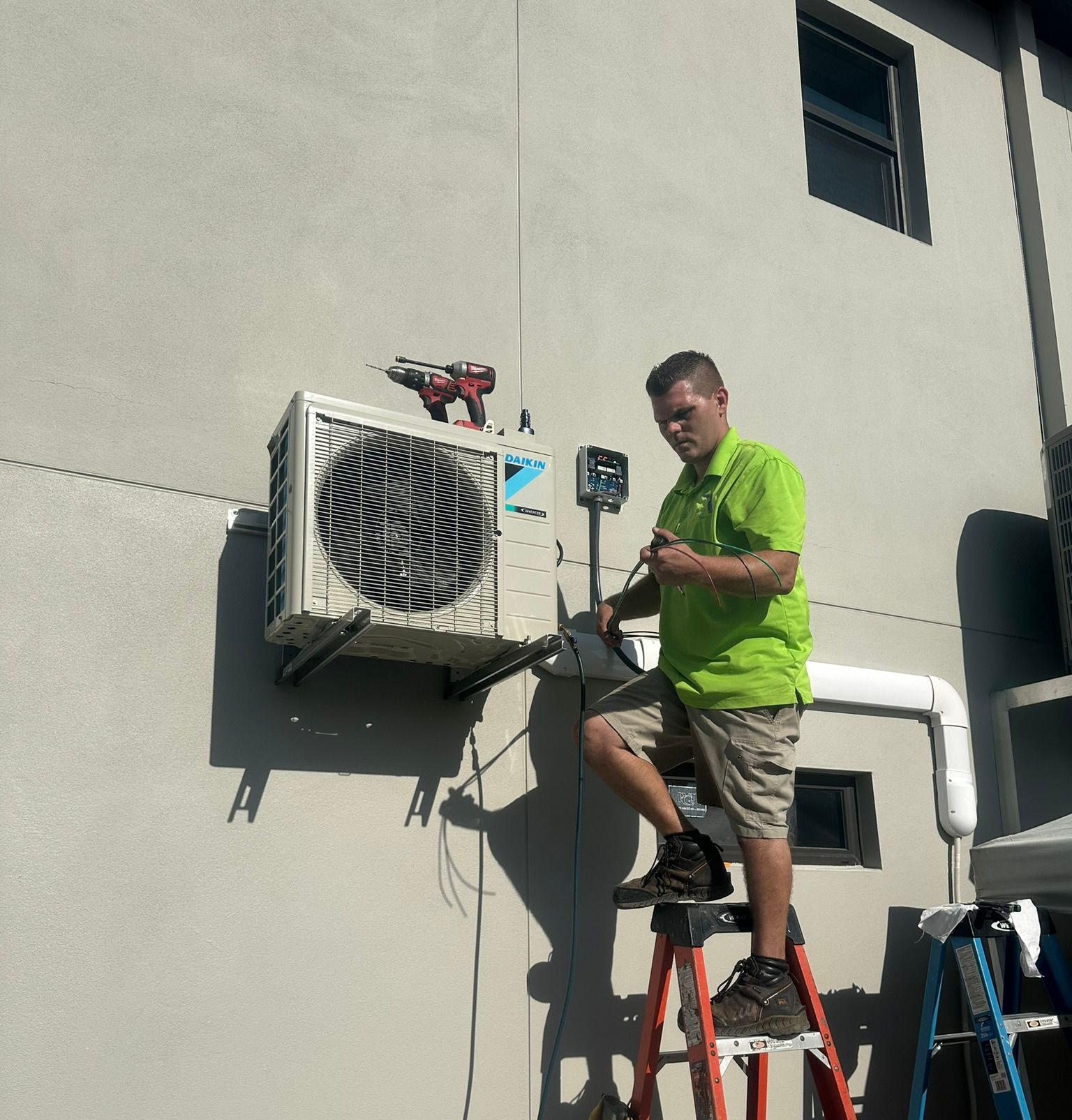
From Assessment to First Cool Breath: Florida AC Services' Heat Pump Process
Every step in our process exists for a reason: to make sure your heat pump performs correctly in your specific home for years to come.
1. Home Assessment and System Sizing
A licensed technician visits the property and calculates the heating and cooling load for the home, factoring in square footage, insulation levels, window exposure, and Florida's humidity load. Correct sizing prevents the short-cycling and efficiency losses that come from an oversized unit or the constant running that comes from one too small.
2. Equipment Selection and Scheduling
Based on the load calculation, we recommend a heat pump system matched to the home's requirements and the homeowner's efficiency goals. We confirm the installation date, same-day or next-available, and handle all equipment sourcing before arrival.
3. Installation and Refrigerant Charging
Our technicians install the indoor air handler and outdoor condensing unit, run refrigerant lines, and charge the system to the manufacturer's exact specification. Refrigerant handling requires EPA certification, and ours is current and on file.
4. Thermostat Setup and System Integration
We connect and configure the thermostat for both heating and cooling modes, verify reversing valve operation, and confirm the system communicates correctly with any zoning or smart home controls the homeowner has in place.
5. Test, Inspect, and Walk-Through
Before leaving, we run a full operational test across both heating and cooling cycles, check airflow at every supply register, and walk the homeowner through the system's operation, maintenance intervals, and warranty terms.
Heat Pump Questions for Homeowners Ask Most
Can a Heat Pump Replace Both My Air Conditioner and Furnace in a Home?
Yes, a heat pump handles both heating and cooling in a single system, making a separate furnace unnecessary in most homes. Because winters are mild, a heat pump extracts enough warmth from outdoor air even on the coldest nights, delivering efficient comfort without the cost of running two separate systems.
What Does SEER Rating Mean, and What Should I Look for?
SEER (Seasonal Energy Efficiency Ratio) measures how efficiently a heat pump cools over a full season: the higher the number, the lower your energy bill. For a long cooling season, we recommend a minimum SEER2 of 15 for meaningful savings. Higher-SEER systems cost more upfront but typically recover the difference within a few cooling seasons.
How Often Does a Heat Pump Need Servicing?
Because heat pumps run nearly year-round for both heating and cooling, we recommend servicing twice a year: once before the cooling season and once before winter. Bi-annual maintenance catches refrigerant issues, cleans coils, and checks the reversing valve before a fault turns into a breakdown during peak demand.
How Long Do Heat Pumps Typically Last?
Most heat pumps last 12 to 15 years with regular maintenance. The near-constant operation in our climate accelerates wear compared to cooler states where systems sit idle for months. When repair costs exceed half the replacement value, or when the system is past 12 years old, replacement is usually the more cost-effective choice.
Do You Service All Heat Pump Brands?
Yes, our technicians are trained to service all major heat pump brands, including
Carrier
Trane
Lennox
Rheem
Daikin
We are a Daikin dealer, which means we can source Daikin parts directly and provide manufacturer-backed support on Daikin equipment. For other brands, we carry common parts and can source what we need quickly.





